
The Developing Brain: What Parents Need to Know (0–12 Years)

Parenting gets easier when you stop asking, “Why is my child like this?” and start asking, “What is their brain capable of right now?”From birth to around 12, children’s brains are under rapid construction. Many everyday struggles—tantrums, impulsive behavior, picky eating, bedtime battles, “not listening”—make more sense when you understand what’s still developing.
This guide explains the big brain-building stages in plain language and shows what you can do at home to support healthy development.
The simple model: “Upstairs brain” vs “Downstairs brain” Daniel Siegel (2024)
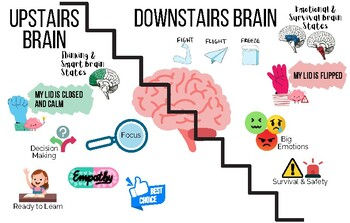
A helpful way to understand behavior is to picture two systems working together:
Downstairs brain (survival + emotion): reacts fast. Handles fear, anger, excitement, stress.
Upstairs brain (thinking + control): plans, reasons, manages impulses, considers consequences.
In young children, the downstairs brain is strong and quick. The upstairs brain is still developing—especially the parts involved in self-control, attention, and emotional regulation. That’s why “They know better” doesn’t always translate to “They can do better (yet).”
Parenting takeaway: In heated moments, your child may not be able to access logic. Connection and calming come first; teaching comes after.
What’s actually developing from 0–12?
Children aren’t just learning facts. They’re building the brain skills that make learning and behavior possible.
1) Emotional regulation (calm-down skills)
Kids learn regulation by borrowing yours—this is called co-regulation. Over time, they internalize it.
What you might see:
Big feelings that switch quickly
Meltdowns when tired, hungry, overstimulated
Difficulty “using words” when upset
What helps most: predictable routines, calm tone, and naming emotions (“You’re frustrated because…”).
2) Executive functions (the “CEO” skills)
Executive functions include:
Impulse control (stop and think)
Working memory (hold instructions in mind)
Flexible thinking (shift plans, handle change)
These skills develop gradually through childhood and are heavily shaped by environment and practice.
What you might see:
“Forgetting” instructions you just said
Struggling with transitions (play → homework)
Doing well one day and melting down the next
What helps most: short instructions, visual reminders, and practicing routines until they become automatic.
3) Attention and learning readiness
Attention is not a personality trait—it’s a skill. And it’s affected by sleep, stress, screen habits, and how tasks are presented.
What you might see:
Easily distracted during homework
Hyperfocus on games but not on worksheets
Resistance to tasks that feel hard
What helps most: shorter work blocks, movement breaks, and making tasks feel achievable (“Start with 3 questions”).
4) Social brain development
Kids are learning:
empathy (slowly and unevenly)
taking turns
reading social cues
repairing after conflict
What you might see:
“He started it!” arguments
Tattling
Difficulty sharing or losing games
What helps most: coaching scripts (“Say: ‘Can I have a turn after you?’”) and teaching repair (“Let’s fix it—what can you say?”).
A quick age-by-age guide (0–12)
Ages 0–2: Safety, attachment, and sensory learning
This is the foundation stage. Babies learn: “Is the world safe? Are my needs met?”
Your focus:
responsive caregiving (feed, soothe, connect)
lots of talking and face time
simple routines (sleep, feeding)
Useful mindset: You can’t spoil a baby with comfort—you're building security.
Ages 3–5: Big feelings, growing independence
This stage often looks like “defiance,” but much of it is skill lag (they want independence without the regulation skills).
Your focus:
clear boundaries + calm repetition
choices within limits (“Red shirt or blue shirt?”)
emotion vocabulary
Useful mindset: They’re not giving you a hard time—they’re having a hard time.
Ages 6–9: Rules, friendships, and self-image
School increases demands on attention, behavior, and social navigation. Kids become more sensitive to comparison and criticism.
Your focus:
routines for homework and sleep
praise effort, strategies, and persistence
teach problem-solving steps
Useful mindset: Confidence grows from competence—small wins matter.
Ages 10–12: Early adolescence preview
You may see mood shifts, privacy needs, and stronger opinions. The emotional brain can surge ahead of the thinking brain.
Your focus:
keep connection strong (short daily chats)
collaborate on rules
teach boundaries for devices and friendships
Useful mindset: This is a training season—your influence is still huge.
Why “talking more” often doesn’t work
When a child is dysregulated, the brain is in fight/flight/freeze mode. Long lectures won’t land, even if your points are correct.
Try this order instead:
Calm the body (breathe, drink water, quiet corner)
Connect (“I’m here. You’re safe.”)
Coach (what to do next time)
Correct (consequence if needed)
This doesn’t mean “no consequences.” It means consequences work better when the brain is calm enough to learn.
3 daily habits that build your child’s brain (without extra time)
Habit 1: The “10-minute connection”
Spend 10 minutes with your child doing what they choose (no teaching, no correcting).This strengthens attachment and reduces attention-seeking behavior later.
Tip: Put the phone away. The brain reads divided attention as “less safe.”
Habit 2: Narrate the day (language = thinking)
Talk through ordinary moments:
“We’re putting shoes on, then we’re leaving.”
“You look disappointed. You wanted more playtime.”
This builds language, emotional literacy, and working memory.
Habit 3: Predictable routines (structure builds self-control)
Routines reduce decision fatigue and power struggles.
Start with just two:
Morning launch routine
Bedtime wind-down routine
Keep them visible (a simple checklist on the wall works well).
Common worry: “Is my child behind?”
Development is uneven. A child can be advanced in reading but behind in emotional regulation—or vice versa. Look for patterns over time, not one bad week.
Consider extra support if you consistently see:
extreme, frequent meltdowns beyond what’s typical for age
persistent sleep problems
serious aggression
inability to function at school or at home despite consistent routines
If you’re in Singapore, you can also speak with your child’s school teacher, school counsellor, or a paediatrician for guidance on next steps.
Closing: The goal isn’t perfection—it’s progress
Your child’s brain is built through thousands of small moments: how you respond to mistakes, how you handle conflict, how safe home feels, and how consistently boundaries are held.
In the next article, we’ll move from “how the brain develops” to the practical piece: conversations that build thinking skills and emotional intelligence—without turning into lectures.

Ahmad Taufiq - Lead Practitioner and Founder


Comments